


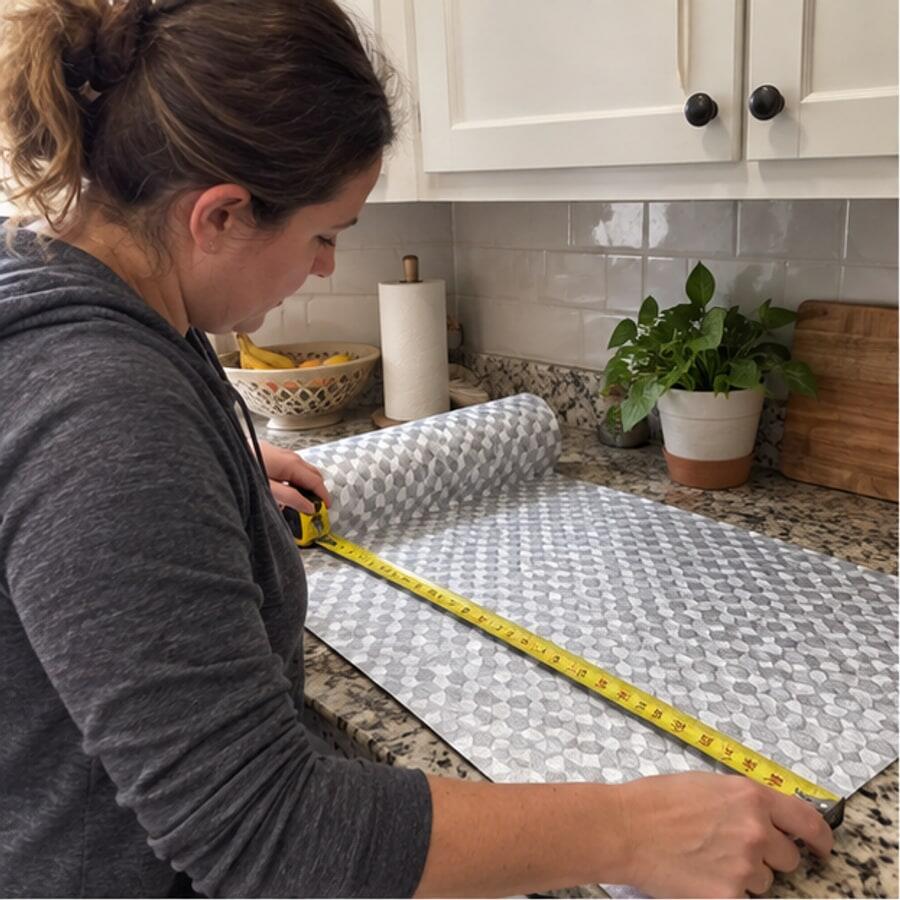
I used the 60 cm roll for the backsplash and measured twice before cutting. The grid-like cube pattern made it fairly easy to keep the first section straight.
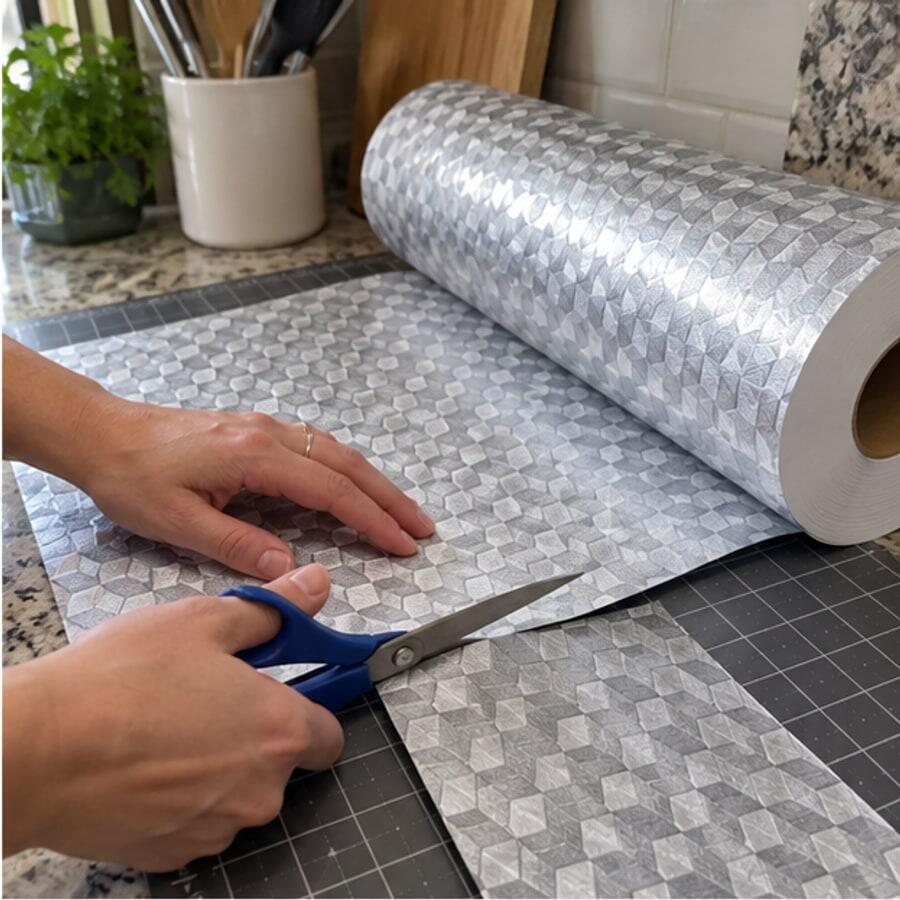
The material was flexible enough to cut on a mat without fighting the roll. A sharp pair of scissors gave me a cleaner edge than my older utility blade.
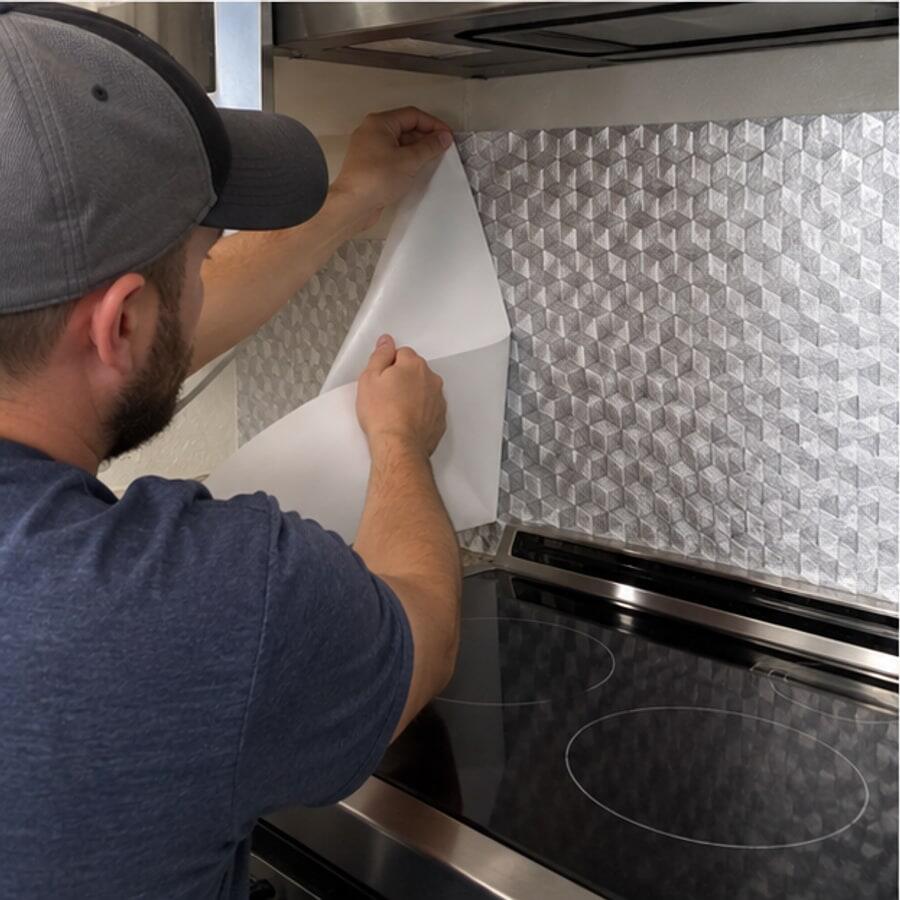
I worked a little at a time and pulled the white liner down as I pressed the sheet onto the wall. That kept the adhesive from grabbing too early.
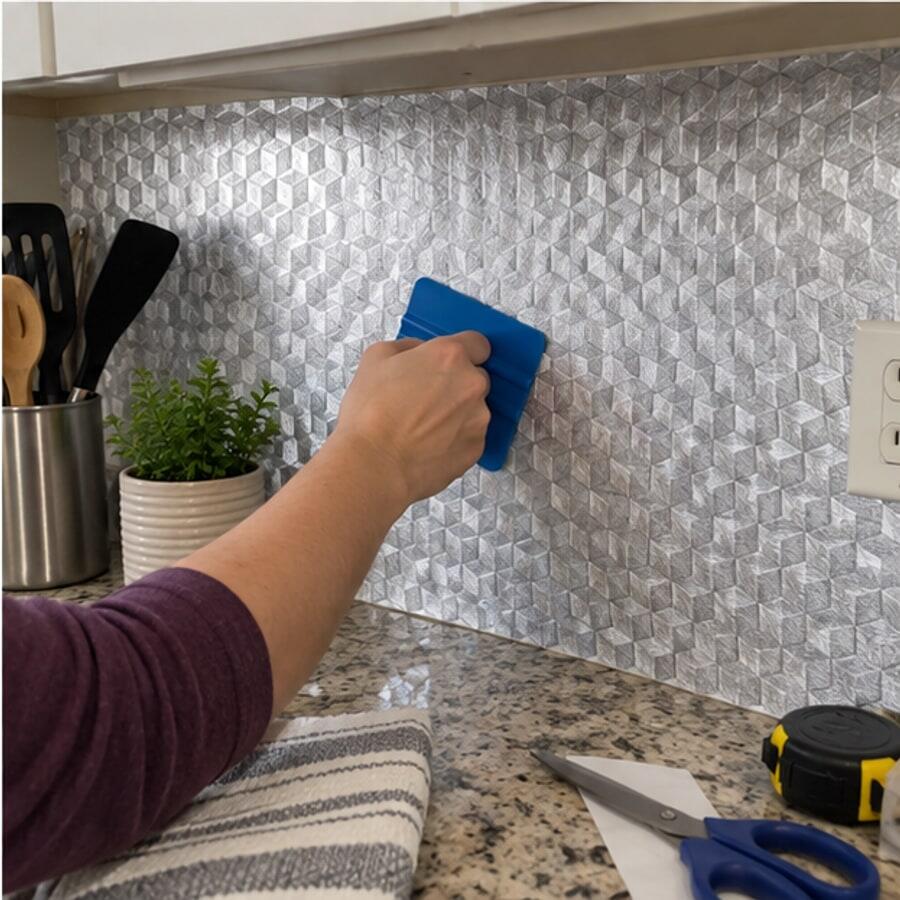
Starting in the center and smoothing outward worked well. I still had to lift one edge once, but the finished backsplash looks neat for a DIY project.
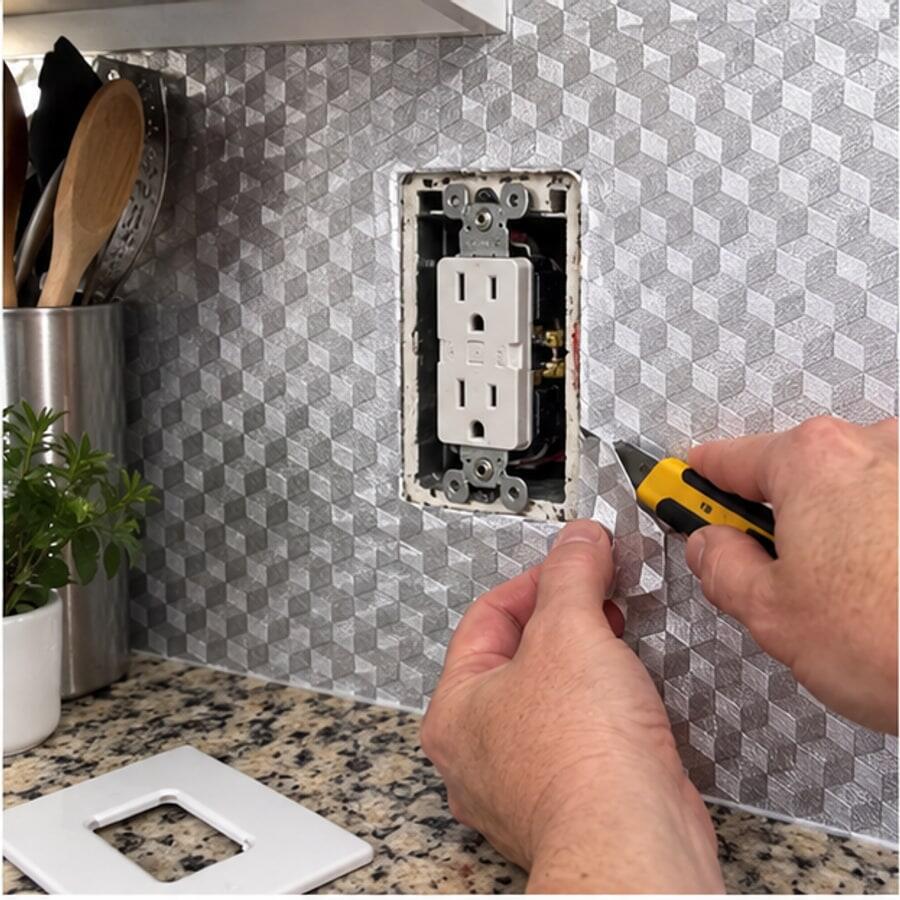
I shut off the breaker, removed the faceplate, and marked the opening before trimming. Taking my time gave me a much cleaner fit around the outlet.
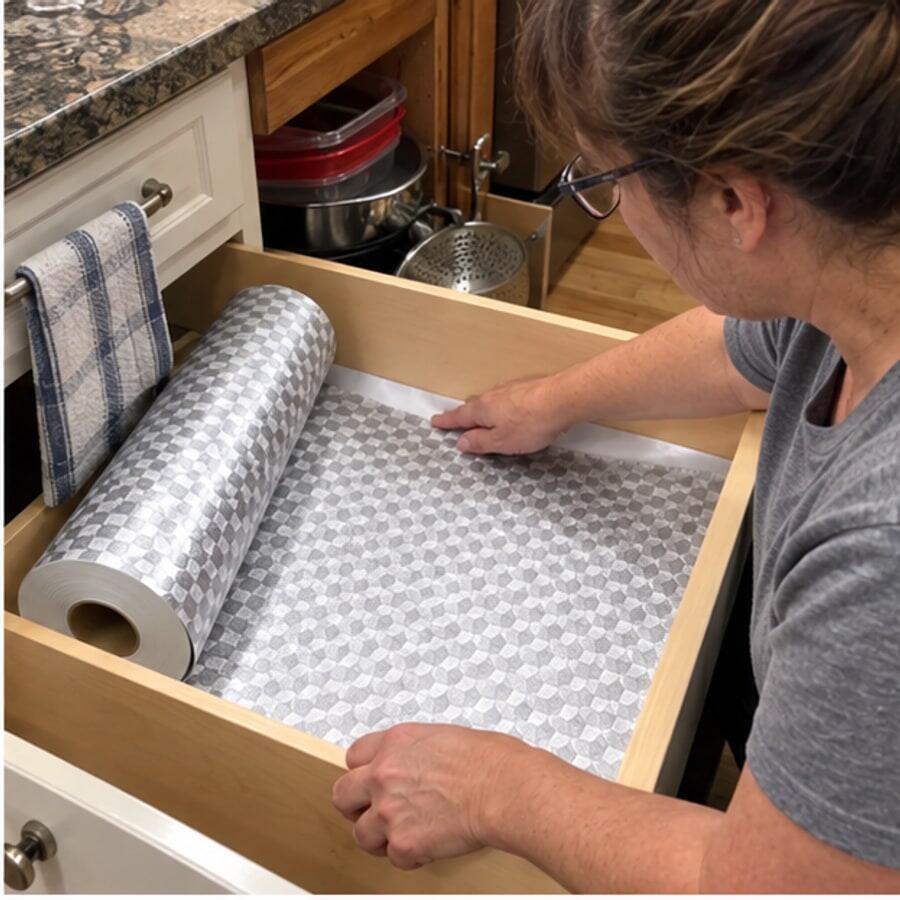
I used a leftover piece in a wide kitchen drawer. The silver cube texture brightened the inside and crumbs wipe up faster than on the old wood surface.
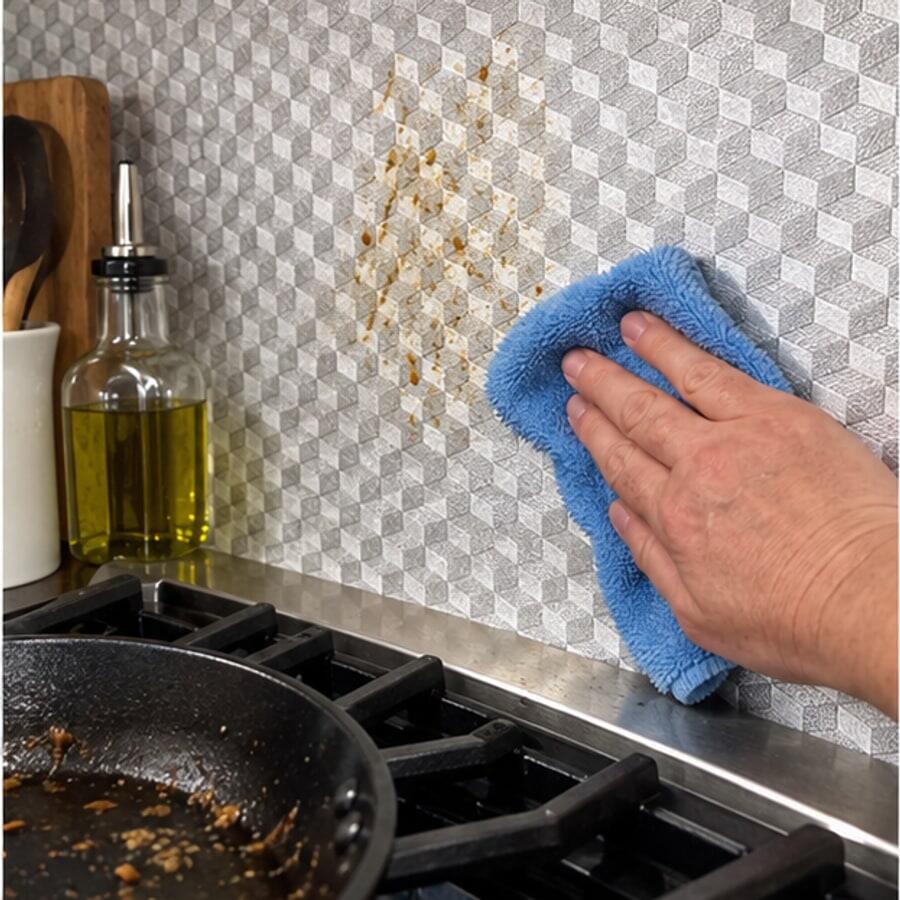
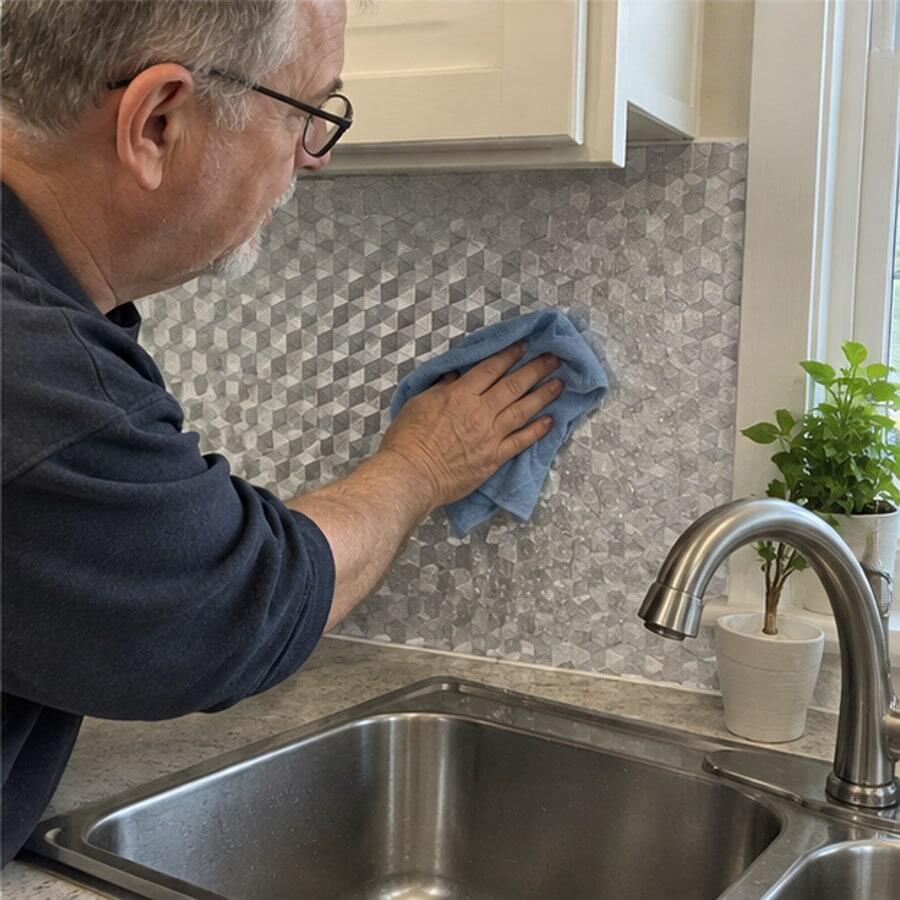
After cooking I used a damp microfiber cloth on the backsplash. The greasy spots came away without soaking into the surface.
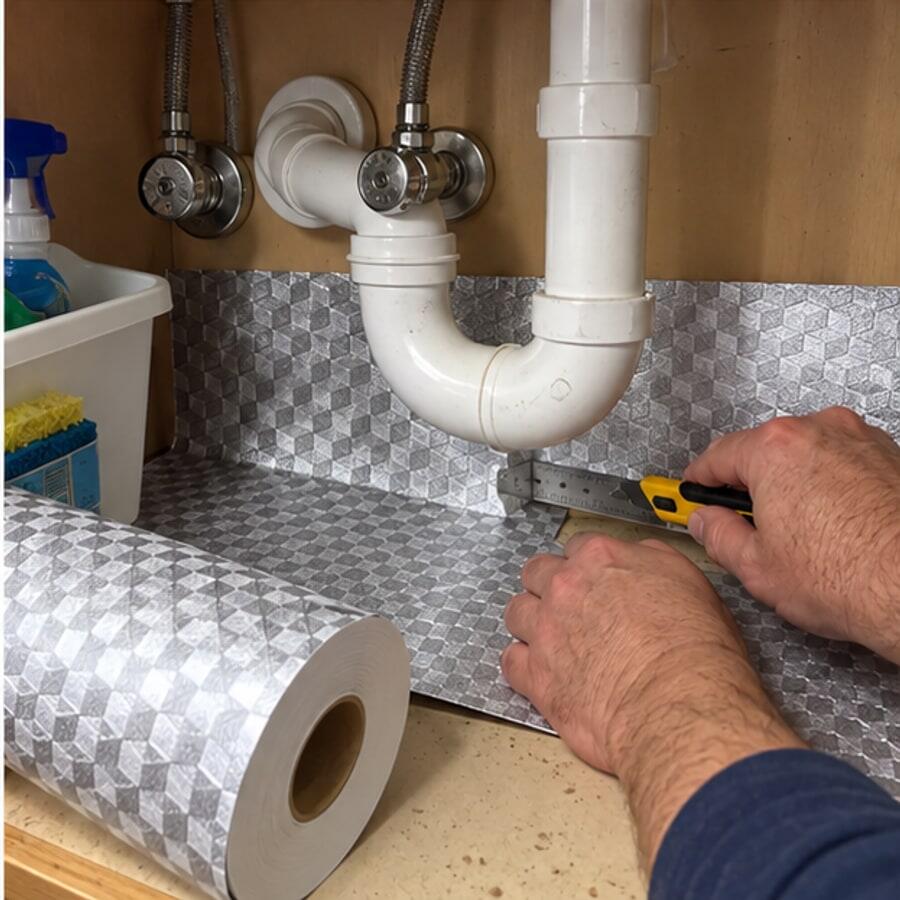
The 40 cm size worked well for lining the cabinet base around the plumbing. I made a paper template first, which saved a lot of awkward trimming.
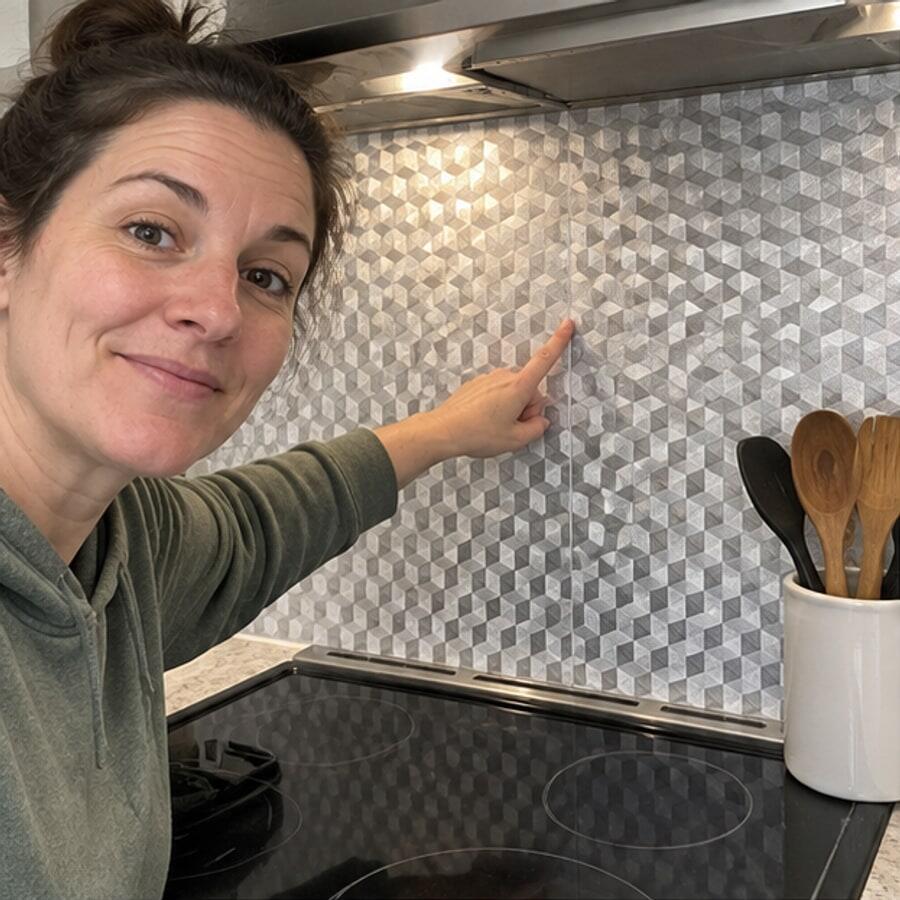
I needed two strips behind the stove. Matching the cube pattern took a few minutes, but the vertical join is not very noticeable from normal distance.
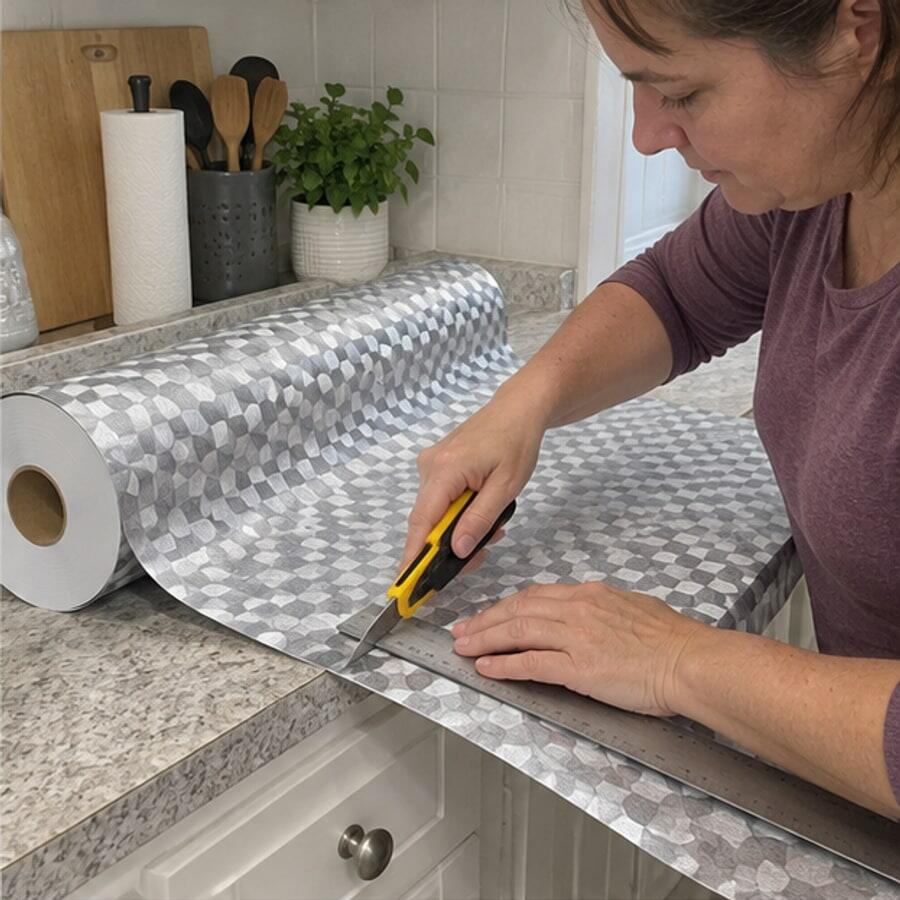
I trimmed the excess along the counter with a metal straightedge. The sheet stayed flat while cutting and the corner looks much cleaner now.
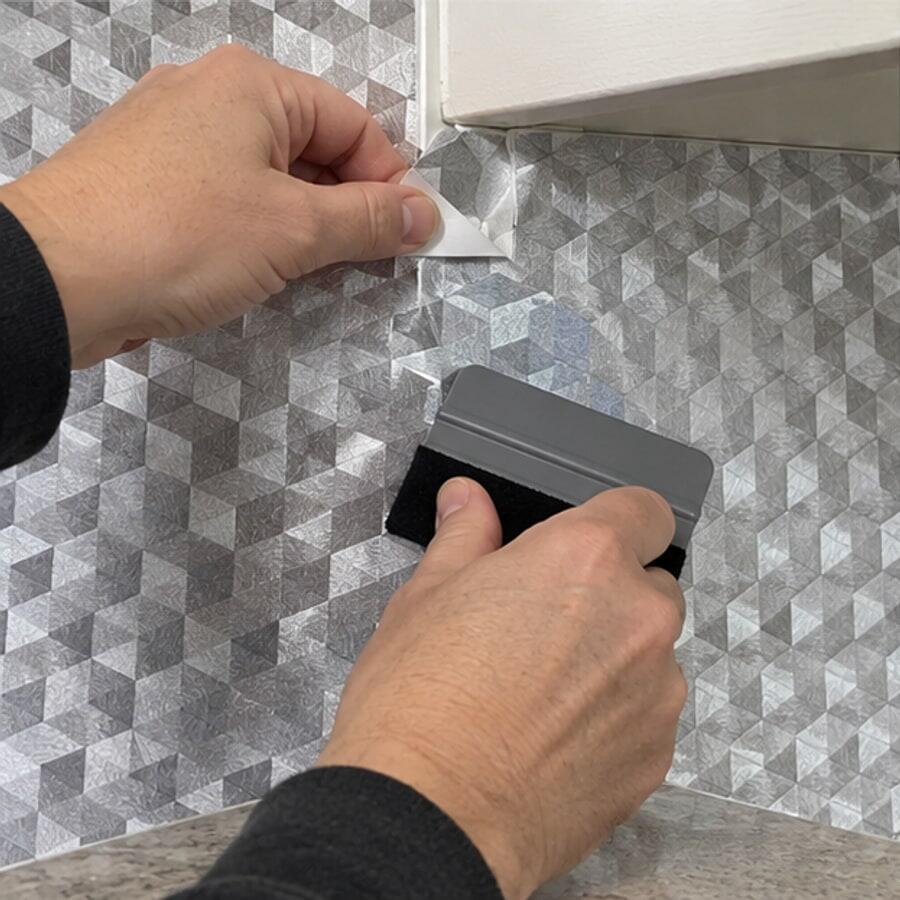
A corner lifted after my first pass because the wall was dusty. I cleaned it, pressed it again with the squeegee, and it has stayed down.
Water droplets sit on top of the foil instead of soaking in. A quick wipe keeps the silver surface looking clean without special cleaner.
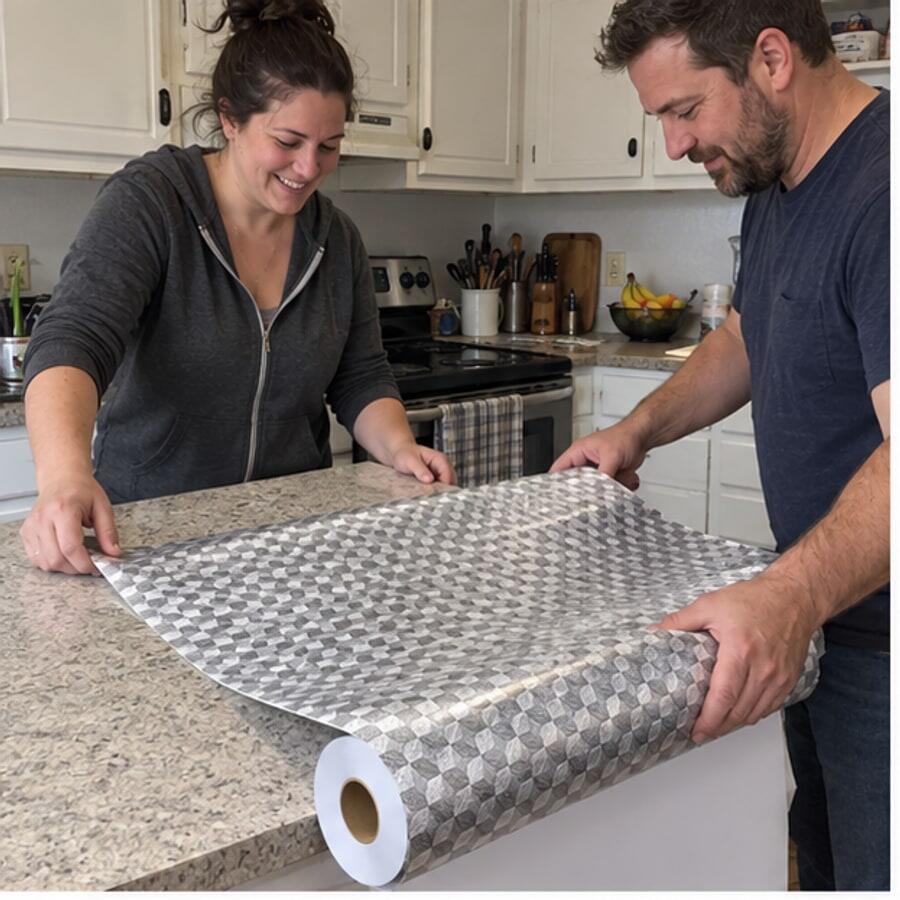
My husband and I used the 80 cm size across a larger counter section. Having two people made alignment much easier and reduced the number of seams.
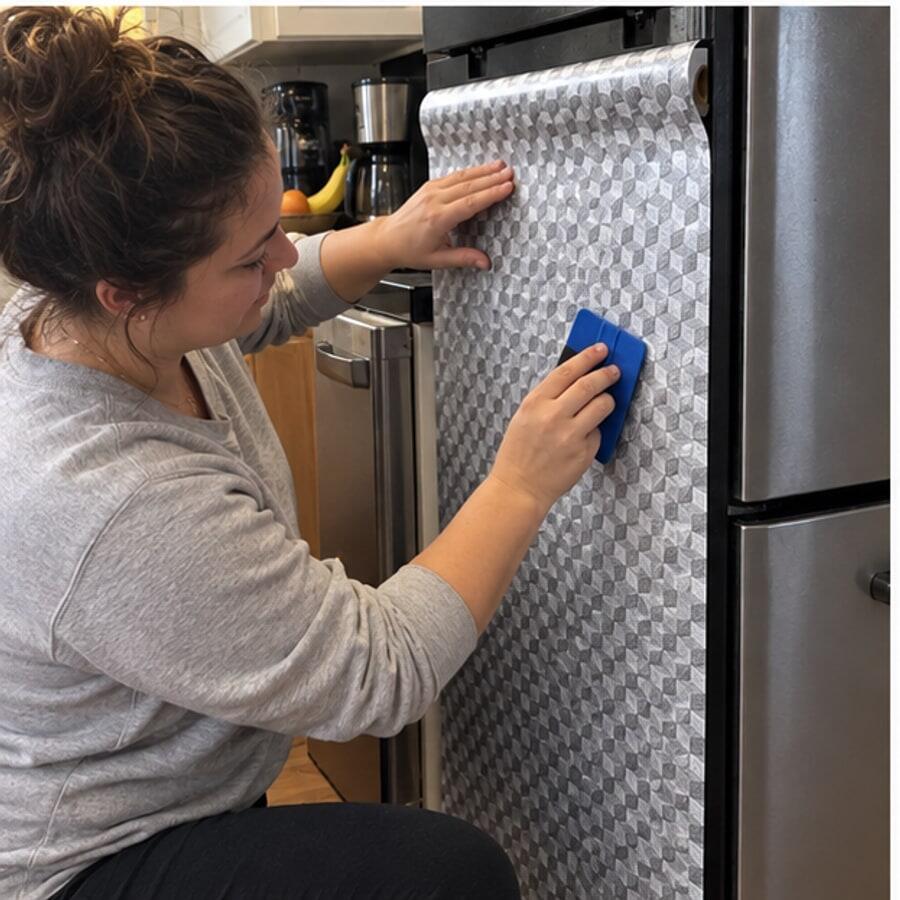
I added a measured piece to the side panel next to my refrigerator. Slow pressure with a felt squeegee kept the pattern smooth.
The 60 cm roll covered my worn pantry shelf with only a narrow strip left over. The textured finish hides small marks underneath better than plain white paper.
I accidentally splashed water across the covered counter edge. It wiped dry in seconds and the adhesive underneath did not appear affected.
I missed one little bubble near the middle. A tiny pinhole and another pass with the squeegee flattened it without leaving an obvious mark.
The narrow offcuts were useful on a cabinet side, so very little material went to waste. Marking the back with pencil made the cuts simple.
The foil looks good, but joining two strips took more time than I expected. I had to reposition the second piece so the cube pattern lined up.
The finished backsplash brightened the kitchen and wipes clean well. Working with a wide roll was easier with two people, especially at the first edge.